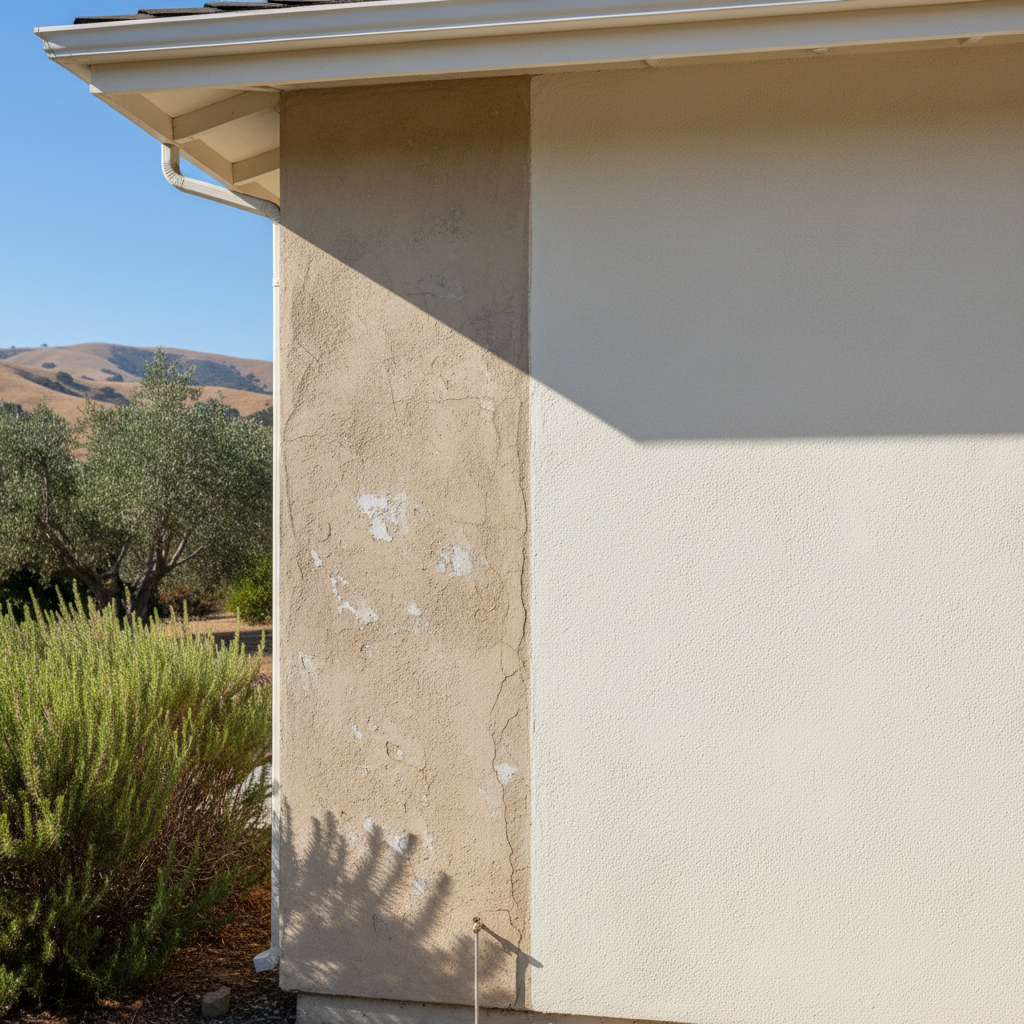
So, you're probably wondering what the big deal is with commercial stucco, right? And why you'd even think about putting it on your home here in Stanford? Well, it boils down to how tough it is, how well it performs, and honestly, just feeling good about your exterior. Commercial buildings really put their outside walls through the wringer, and sometimes, those same benefits just make perfect sense for a high-value house.
When folks talk about commercial stucco, they're usually thinking about one of two main setups: either the old-school, three-coat cement-based stucco, or Exterior Insulation and Finish Systems (EIFS). I've put both of these in for years, all over the Bay Area. I've seen them hold up through everything, from our sizzling, dry summers to those heavy winter downpours that roll in from the Santa Cruz Mountains. Let's dig into what each one actually means for your place.
Traditional 3-Coat Stucco: The Old Reliable
This is probably what pops into most people's heads when they hear 'stucco.' It's a classic for a good reason, you know. We put it on in three layers over a lath and paper system: first a scratch coat, then a brown coat, and finally the finish coat. Each layer gets time to cure, which makes for a super strong, really rigid exterior.
Cost
Upfront, traditional 3-coat stucco usually costs less to install than EIFS. The materials themselves are pretty basic — cement, sand, lime, water. And while the labor is still a big part of it because there are so many steps, it generally comes in cheaper than the specialized installation EIFS needs.
Durability
This stuff is seriously tough. Think of it like a thin concrete shell. It handles impacts really well and stands up to the weather for decades. We're talking 50 years or more if it's put in right and you keep up with it. A kid hitting a baseball against it? That's not going to dent it, for example. It's also fire-resistant, which is a huge bonus in our dry California climate.
Maintenance
Keeping it up is pretty straightforward. Just clean it, keep an eye out for cracks, and fix them fast. Hairline cracks are normal over time as the house settles and temperatures change, but bigger cracks definitely need attention to stop water from getting in. Repainting every 10-15 years is typical if you want to keep it looking sharp.
Appearance
You get that classic, hard, masonry look. The finish can be smooth, textured, or even hand-troweled for a custom feel. Color options are huge, either by mixing color right into the finish coat or by painting it after it's cured. It just has that solid, substantial vibe.
EIFS: The Modern Insulated Choice
EIFS is a synthetic stucco system. It's built up differently: first, an insulation board (usually expanded polystyrene, or EPS) gets attached to the sheathing. Then, a base coat with a fiberglass mesh goes over the insulation, and finally, a tough finish coat. It's a complete exterior wall system, from the ground up.
Cost
EIFS usually has a higher upfront installation cost. The materials are more specialized, and putting it in correctly needs specific training and a sharp eye for detail to make sure everything's sealed and draining right. However, you could see long-term savings on your energy bills, which might balance out some of that initial investment.
Durability
Modern EIFS systems are very durable. They're flexible, so they resist cracking better than traditional stucco does. They're also fantastic at shedding water. The insulation board helps with impact resistance, though it can show localized dents more easily than traditional stucco if it gets a really hard hit. The biggest perk here is the insulation itself — it seriously boosts your home's thermal performance. That means cooler summers and warmer winters, which is great for those older homes near the Stanford campus that might not have much wall insulation to begin with.
Maintenance
Maintenance is similar to traditional stucco: cleaning, checking for damage. The main difference is that any breaks in the EIFS system, especially around windows and doors, need to be fixed quickly and correctly. Otherwise, water can get behind the system and cause bigger headaches. It's just less forgiving of neglect than traditional stucco in that way.
Appearance
EIFS offers incredible design freedom. You can get almost any architectural style you can imagine, from sleek and modern to really intricate details and cornices that would be tough, or even impossible, with traditional stucco. The finish coat is usually acrylic-based, offering vibrant, long-lasting colors that hold up better against fading than paint on cement stucco.
My Takeaway for Stanford Homeowners
For most homeowners in Stanford, especially if you're looking to upgrade an existing property, I usually recommend a well-installed traditional 3-coat stucco system. Here's why:
- Proven Performance: It's been around forever, and we know exactly how it acts in our climate. It's incredibly sturdy.
- Cost-Effective: A lower initial cost means you have more budget for other home improvements, doesn't it?
- Easier to Fix: If it gets damaged, it's generally simpler and less specialized to repair than EIFS.
- Moisture Management: Both systems need to be installed perfectly to avoid water problems, but traditional stucco is a little more forgiving if a small amount of moisture gets behind it, since it breathes better.
That said, if energy efficiency is your absolute top priority, and you're building new or doing a major renovation where you can guarantee a perfect, warrantied EIFS installation, then EIFS is definitely worth thinking about. The insulation benefits are real, and you'll feel them in your utility bills.
Ultimately, both are excellent choices when the job is done right. What really matters most is the quality of the installation. And that's where Midway Stucco Co. comes in. We don't cut corners, no matter which system you pick. We've been doing this long enough to know that a good stucco job isn't just about the materials; it's all about the craftsmanship.